
In short
- The personalised football book shirt number can be anything from 1 to 99.
- Most children pick their age, their favourite player’s number, or the one they wear for their own team.
- Numbers used to indicate position, and some children still care about that.
- Picking their real team number is the choice that ages best.
The shirt number is the smallest decision in a personalised book and the one children have the strongest opinions about.
 Make them the star of their club's storyA personalised, hand-drawn football book for more than 100 clubs. £24.95Find their club
Here is how to choose a personalised football book shirt number.

What personalised football book shirt number should you choose?
Their own, if they play. A child who wears 7 for their Saturday team will want 7, and anything else will feel wrong to them.
If they do not play, the usual choices are their age, their favourite player’s number, or a number they simply like.
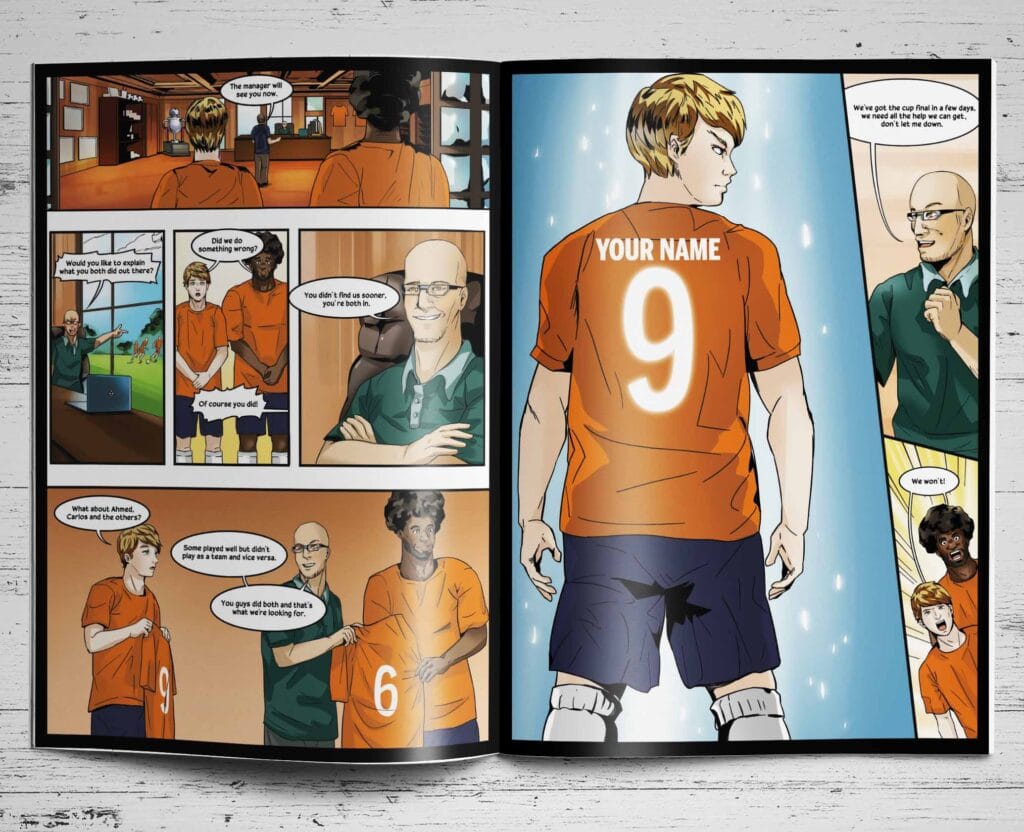
Our books take any number from 1 to 99, and our book design page shows where it appears.
Why do numbers matter to children?
Because they are claimed. In junior football squad numbers get allocated and traded, and a child who has secured a number they wanted is attached to it.
Picking a different one for a book overrides something they chose themselves, which is a small thing that lands badly.
If you do not know their number, ask. It takes one message.
Did shirt numbers used to mean something?
They did. Before squad numbers arrived, the number told you the position: 1 the goalkeeper, 2 and 3 the full backs, 9 the centre forward, 11 the left winger.
Numbered shirts themselves are credited in part to Herbert Chapman, who pushed for several innovations now taken for granted.
Today a defender can wear 9, which children find mildly outrageous when you explain it.
Which personalised football book shirt number suits which position?
Under the old system, 1 for a goalkeeper, 4 or 5 for a centre back, 6 or 8 for midfield, 9 for a striker and 7 or 11 for a winger.
Plenty of children still choose by position this way, because it is tidier than the modern arrangement.
For a goalkeeper in particular, 1 matters.
What about the age trick?
Choosing the child’s age is common and has one obvious flaw: it dates the book to a single year.
That is either charming or annoying depending on the child. A keepsake arguably benefits from it; a book they will read for five years does not.
Their team number avoids the problem entirely.
Does the number change the story?
No, it appears on the kit rather than driving the plot. But it is the detail a child checks first when they open the book, alongside their name.
Getting it right costs nothing and getting it wrong is immediately visible.
Where to start
Our personalised football books cover every English league, our guide to books by age covers 5 to 12, and the wider football books range includes smaller clubs.

More than 100 clubs
Make them the star of their club's story
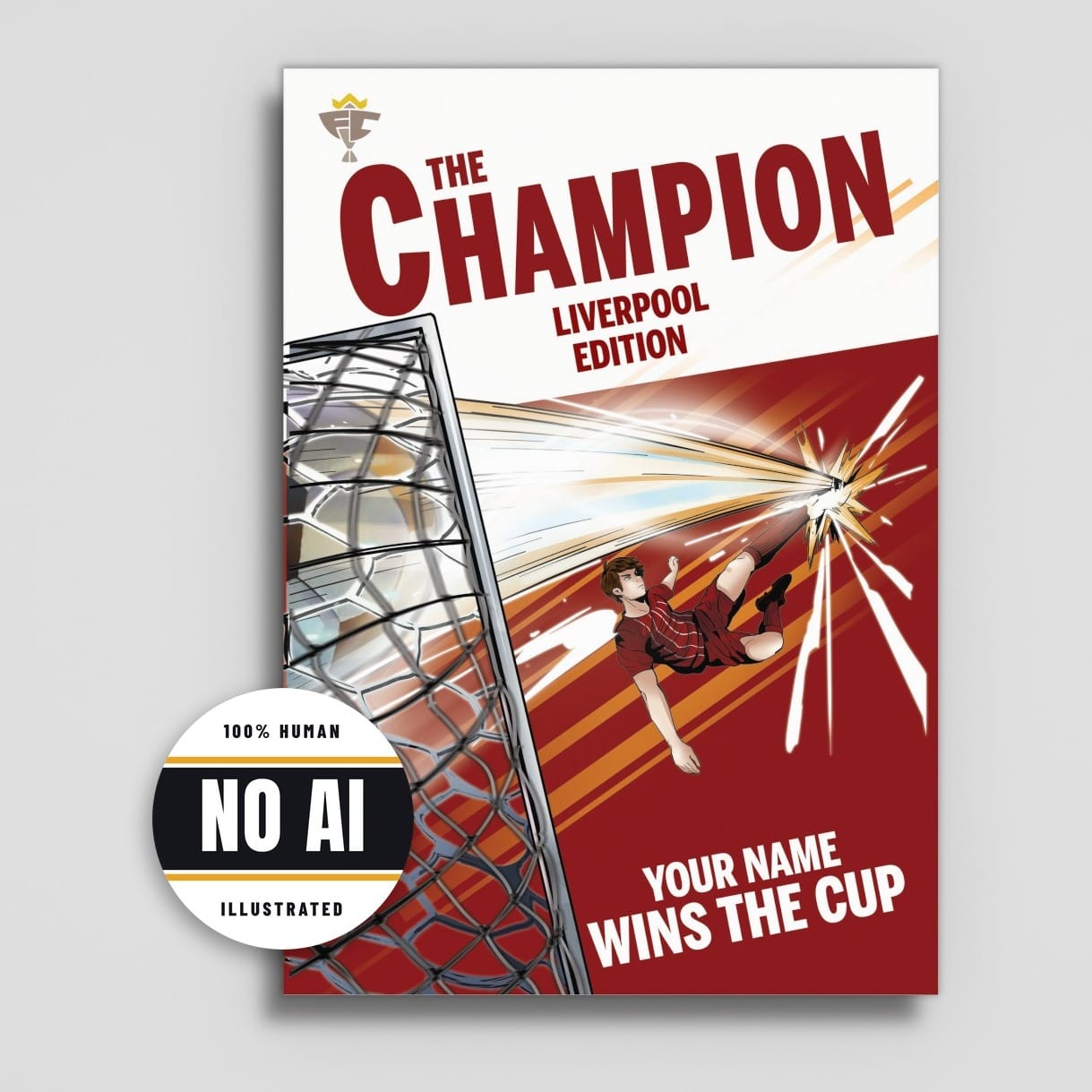
- Their name and shirt number on the cover
- Hair colour, skin tone and eye colour to match them
- Your own message printed inside
- Every page hand-drawn by a human artist, with no AI artwork
For ages 5 to 12. Made to order for your child.
Frequently Asked Questions
What numbers can I choose? Any number from 1 to 99.
Which number should I pick? Their own team number if they play.
Did numbers used to show position? Yes, before squad numbers replaced positional numbering.
Is choosing their age a good idea? It is common, but it dates the book to one year.