
TL;DR
- Age 9 to 11 is the sweet spot for football books for 10 year olds, when children can follow a full story rather than just picture-led fact books.
- Younger children (5 to 6) do best with football picture books and simple rhyming stories, not full chapter books.
- Charities like BookTrust group football titles into rough bands from 3 to 14, but reading confidence matters more than age on the cover.
- A personalised football storybook works at almost any age because the difficulty adjusts to how you write the message and read it aloud together.
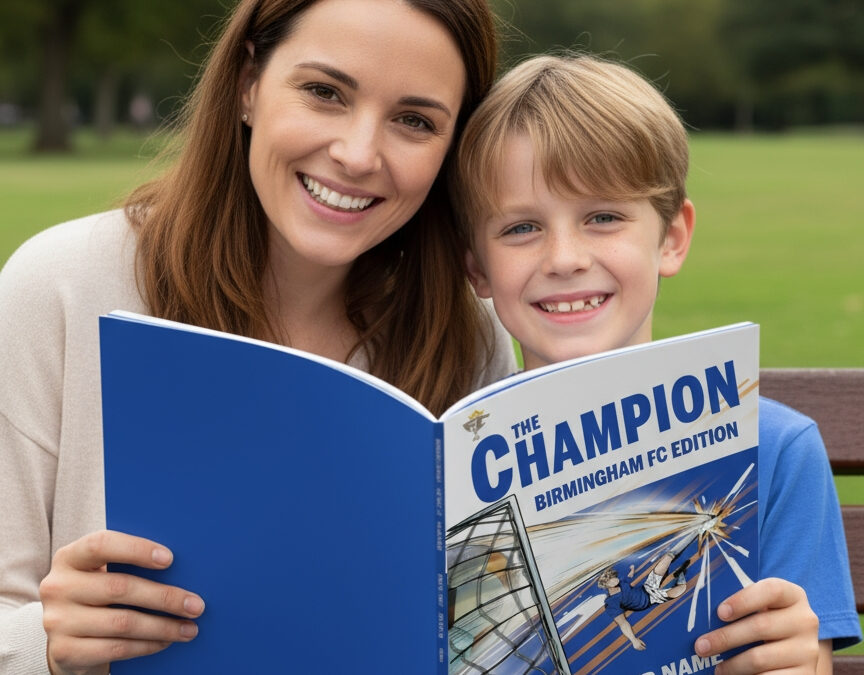
- Every Fantasy Footballer book is illustrated by a real person, never generated, which matters if you care what your child is actually looking at.
Buying a football book for a child is rarely as simple as typing an age into a search bar and trusting the result. A book that thrills a confident seven year old reader can bore a reluctant ten year old stiff, and a story pitched at teenagers will lose a football-mad six year old on page one. This guide breaks football books for 10 year olds down by age and reading confidence, then explains why a personalised story often works harder than a generic one, whatever shelf it came from.
Why football books get reluctant readers turning pages
Football is one of the few subjects that gets genuinely reluctant readers to pick a book up voluntarily. Recent research from the National Literacy Trust found that just 25% of boys aged 8 to 18 say they enjoy reading in their spare time, well behind girls. Football content closes that gap in a way little else does.
The clearest evidence comes from the Reading Stars intervention, a joint programme between the Premier League and the National Literacy Trust that has run in primary schools for close to 25 years. It uses football articles, stats sheets and stories to teach comprehension to Year 5 and 6 pupils who might not otherwise engage. Three in four pupils on the programme make six months of reading progress in just ten weeks, and seven in ten say they are proud to call themselves readers afterwards.
That is the whole case for football books in one statistic. If a child already loves the game, a book that talks about the game in their language is the shortest route to getting them reading for pleasure, not just for homework.
What age should a child start reading football books?
Most children are ready for their first football book from around age 3, as long as you pick the format to match. A toddler wants big pictures and short, rhythmic sentences read aloud. A ten year old wants a proper plot with a hero they recognise. The children’s book charity BookTrust groups its recommendations into bands running from 3 to 14, which is a useful starting point, but treat it as a guide rather than a rule. A confident seven year old reader can often handle a book pitched at nine, and a reluctant eleven year old might prefer something written for a slightly younger audience.
The honest answer is that reading confidence beats age every time. Below is how we would split the shelf if a parent asked us directly, based on what actually holds a child’s attention at each stage.
Best football books for 5 to 6 year olds
At this age, football books for 6 year olds should be picture-led with short, bouncy text you read together rather than a child reads alone. Look for:
- Rhyming picture books with a clear football scene on every page
- Simple “a day at the match” style stories with big, bright illustrations
- Board books or early readers that name positions, kit and basic rules in plain language
This is also the age where a personalised story earns its keep. A five year old does not care about plot complexity. They care about seeing their own name and their own team on the page, which is exactly what turns “story time” into “my story”.
What are the best football books for 7 to 9 year olds?
The best football books for 7 to 9 year olds mix a real story with football detail, rather than leaning on pictures alone. Football books for 7 year olds work well as short illustrated chapter books, ideally under 100 pages, with a clear hero and a simple goal (literally, usually). By football books for 9 year olds, children can handle a proper subplot, a rival character and a longer arc across a season or tournament.
One UK reading list pitches its football recommendations at ages 6 to 10, which lines up with what we see in practice: this band is where children move from “read to me” to “I read this myself”, and football content is often the thing that tips them over.
What are the best football books for 10 to 11 year olds?
Football books for 10 year olds should read like a genuine story, not a fact file, because by this age most children want a proper narrative arc, believable characters and stakes that feel real. This is the age band where full-length fiction works best: a season-long story, a big cup run, a new signing settling into a team, or a child who becomes the unlikely star player.
Football books for 11 year olds can go slightly darker or more complex, touching on things like team pressure, rivalry and setbacks, since readers this age are ready for a story that does not resolve too neatly. This is also where personalisation has the most impact of any age band. Putting a ten or eleven year old into the story as the actual star player, wearing their actual team’s kit, does something a shelf book cannot: it turns “a book about football” into “a book about me playing football”.
Best football books for 12 year olds and up
By football books for 12 year olds, children can usually read anything an adult fan would enjoy, scaled down slightly in length. Biographies of real players, tactical explainers and longer fiction all work here. If a 12 year old is a reluctant reader rather than a confident one, look for shorter chapters and a faster-moving plot rather than simplifying the football content itself. Older reluctant readers tend to switch off from anything that feels babyish faster than they switch off from anything genuinely difficult.
Why choose a personalised football book over a generic one?
A personalised football book earns a second and third read in a way a generic one rarely does, because the child is not reading about a footballer. They are reading about themselves. We hear this constantly from parents buying for a child who already has every replica shirt, mug and poster going: at that point, a book with their name, their club and their face on the cover is one of the only gifts left that still gets a genuine reaction on the day.
It also solves the age problem described above. Because a personalised story is built around your child specifically, you choose the reading level by how you write the dedication and how involved you are in reading it together, rather than hoping a stranger’s “ages 8 to 10” label on the spine happens to fit.
How is a Fantasy Footballer book different from a standard football book?
A Fantasy Footballer book puts your child’s name, appearance and chosen club into the story itself, across every league from the Premiership down to EFL League 1, not just the handful of big clubs most personalised books cover. You choose your child’s hair colour, skin tone, eye colour and gender when you personalise their book, so the character on the page actually looks like them, not a generic placeholder.
Every illustration is hand-drawn by a real illustrator. Nothing is generated by a computer, from the cover to the final page. If your daughter is the football fan in the family, our Ladies Range storybooks exist for exactly that, since most personalised football books on the market still assume the reader is a boy.
Frequently asked questions
What is the best football book for a reluctant reader? Pick the shortest, most plot-driven option for their age band rather than the most detailed one. A personalised story where they are the main character also helps, since the motivation to keep reading is built in.
Do football books actually help with reading skills? The evidence from the Reading Stars programme above suggests yes, specifically because football content increases motivation to read in children who otherwise avoid it.
Is a personalised book worth it over a normal book from a shop? If your child already owns football books, a personalised one gives them something a generic title cannot: themselves as the star player, in their own kit, on their own team.