
TL;DR
- Children’s football books split into two broad camps: fiction (stories with a hero and a plot) and facts (annuals, stat books, player profiles). Most children want both at different moments.
- Reading confidence matters more than the age printed on the cover. A keen seven year old often reads up, and a reluctant eleven year old often reads down.
- Football is one of the few subjects that gets reluctant readers turning pages voluntarily, which is backed by school reading research.
- Football comics and graphic novels count, and they are frequently the format that hooks a child who says they hate reading.
- A personalised football story sits above the whole shelf, because the child is not reading about a player. They are the player.
Walk into any bookshop in the country and the football section for children is a jumble: sticker annuals next to serious novels, joke books next to biographies of real players. For a parent trying to buy the right thing, that is not much help. This guide sorts children’s football books into clear types, matches them to age and reading confidence, and explains why a personalised story often does the job better than anything with a barcode.

What are the best children’s football books?
The best children’s football books are the ones that match your child’s reading confidence, not just their age, and that lean into the part of football they love most. A child obsessed with stats wants a facts book. A child who daydreams about scoring the winner wants a story. Start from what pulls them in, then pick the format that fits how well they read.
Charities that specialise in reading do the sorting work for you. The children’s book charity BookTrust keeps a regularly updated football booklist spanning picture books up to teen fiction, which is a reliable place to find titles that have been read and reviewed rather than just marketed. Treat any list as a shortlist, then narrow it by the two questions below.
Should you pick football fiction or football facts?
Pick football fiction if your child likes stories and characters, and football facts if they like numbers, records and real players. Most children enjoy both, so the honest answer is usually to have one of each on the shelf and let them reach for whichever suits their mood.
Football facts books include annuals, record books, quiz and joke books, and player profiles. They are perfect for dipping in and out, for car journeys and for children who find a long story daunting.
Football fiction, meanwhile, is where reading for pleasure really takes hold. A story with a hero, a rival and a season to win teaches a child to follow a plot across many pages, which is the skill that carries over into every other subject at school.
What age should a child start reading football books?
Most children are ready for their first football book from around age 3, as long as the format matches the age. A toddler wants big pictures and a short, rhythmic story read aloud. A ten year old wants a proper plot with a hero they recognise and stakes that feel real.
One UK reading list pitches its football recommendations across a wide band from early readers up to teens, which reflects reality: there is a football book for almost every stage, but the jump from picture book to chapter book to full novel happens at a different moment for every child. Reading confidence beats the age on the cover every time.
Children’s football books by age
Here is the short version of how the shelf breaks down. For the detailed picks and reasoning, our guide to football books by age goes stage by stage from 5 to 12.
- Ages 5 to 6: picture-led books with short, bouncy text you read together, plus early readers that name kit, positions and basic rules.
- Ages 7 to 9: short illustrated chapter books with a clear hero and a simple goal, moving towards a proper subplot by nine.
- Ages 10 to 11: full-length fiction with a season-long arc, believable characters and real stakes.
- Ages 12 and up: longer fiction, player biographies and tactical explainers, scaled to their reading speed rather than simplified in subject.
Which football books suit reluctant readers?
For reluctant readers, choose the shortest, most plot-driven football book for their age, and do not be afraid to go a band younger. The aim is a quick win that ends with them wanting the next one, not a worthy doorstop that sits unopened.
Football is unusually good at this. Recent research from the National Literacy Trust found that just 25% of boys aged 8 to 18 enjoy reading in their spare time, and football content is one of the clearest ways to close that gap. The Premier League and National Literacy Trust Reading Stars programme has used football stories and stats in primary schools for years precisely because it reaches children who otherwise avoid books.
Are football comics good for kids?
Yes, football comics and graphic novels are genuinely good for children, and they are often the format that converts a reluctant reader into a willing one. The pictures carry some of the load, the text feels less intimidating, and the pace suits a child who loses patience with dense pages.
Comics and graphic novels are reading, not a lesser substitute for it. A child following a football comic is decoding text, tracking a story and building stamina, then usually moving on to longer books with more appetite than before. If your child gravitates to football comic books over prose, lean into it rather than fighting it.
Why do personalised football books work so well?
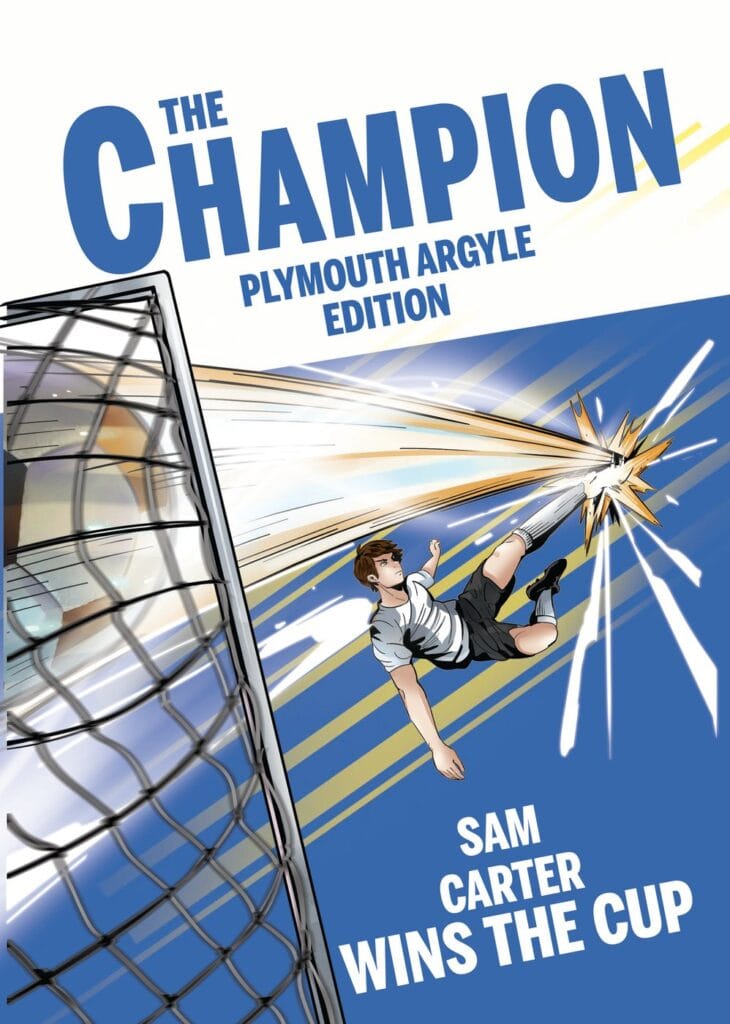
A personalised football book works because the child is not reading about a footballer. They are reading about themselves scoring the winner for their own club, which earns a second and third read a generic title rarely gets. We hear this most from families buying for a child who already owns every shirt, mug and poster going: at that point a book with their name and their team on the cover is one of the few gifts that still gets a real reaction on the day.
It also solves the age problem. Because the story is built around your child, you set the reading level by how you write the dedication and how much you read it together, rather than hoping a stranger’s label on the spine happens to fit.

How a Fantasy Footballer book is different
A Fantasy Footballer book puts your child’s name, appearance and chosen club into the story itself, from the Premiership all the way down to League One, not just the handful of big clubs most personalised books cover. You choose their hair colour, skin tone, eye colour and gender when you personalise their book, so the character actually looks like them. Choose their name, their look, their club, and we do the rest.
Every illustration is drawn by a real person, from the cover to the final page, which is the whole point of our hand-drawn books in a market filling up with generated artwork. And if the football fan in your family is a girl, our Ladies Range exists for exactly that, since most children’s football books still assume the reader is a boy.
Frequently asked questions
What are the best football books for a child who hates reading? Pick the shortest, most plot-driven title for their age, or a football comic, and let them go a band younger if it means an easy win. A personalised story where they are the hero also helps, because the reason to keep reading is built in.
Are football comics and graphic novels proper reading? Yes. A child reading a football comic is decoding text and following a story, and comics often build the confidence that leads to longer books.
What is the difference between football fiction and football facts books? Fiction tells a story with characters and a plot, which builds reading stamina. Facts books cover annuals, records, quizzes and player profiles, which suit dipping in and out. Most children enjoy both.
Do football books actually help with reading? The evidence from school reading programmes suggests yes, mainly because football raises a child’s motivation to read in the first place.
Personalise theirs at fantasyfootballer.co.uk.