

In short
- Football comic books are one of the best ways to get a reluctant reader turning pages, because the pictures carry some of the load and the pace never drags.
- Comics and graphic novels are real reading, not a lesser version of it, and they often lead a child on to longer books.
- The format works from about age 5 to 12, with picture-led strips for the youngest and full graphic novels for older children.
- The standout football comic book is one where the child is the star player, not a bystander watching someone else score.
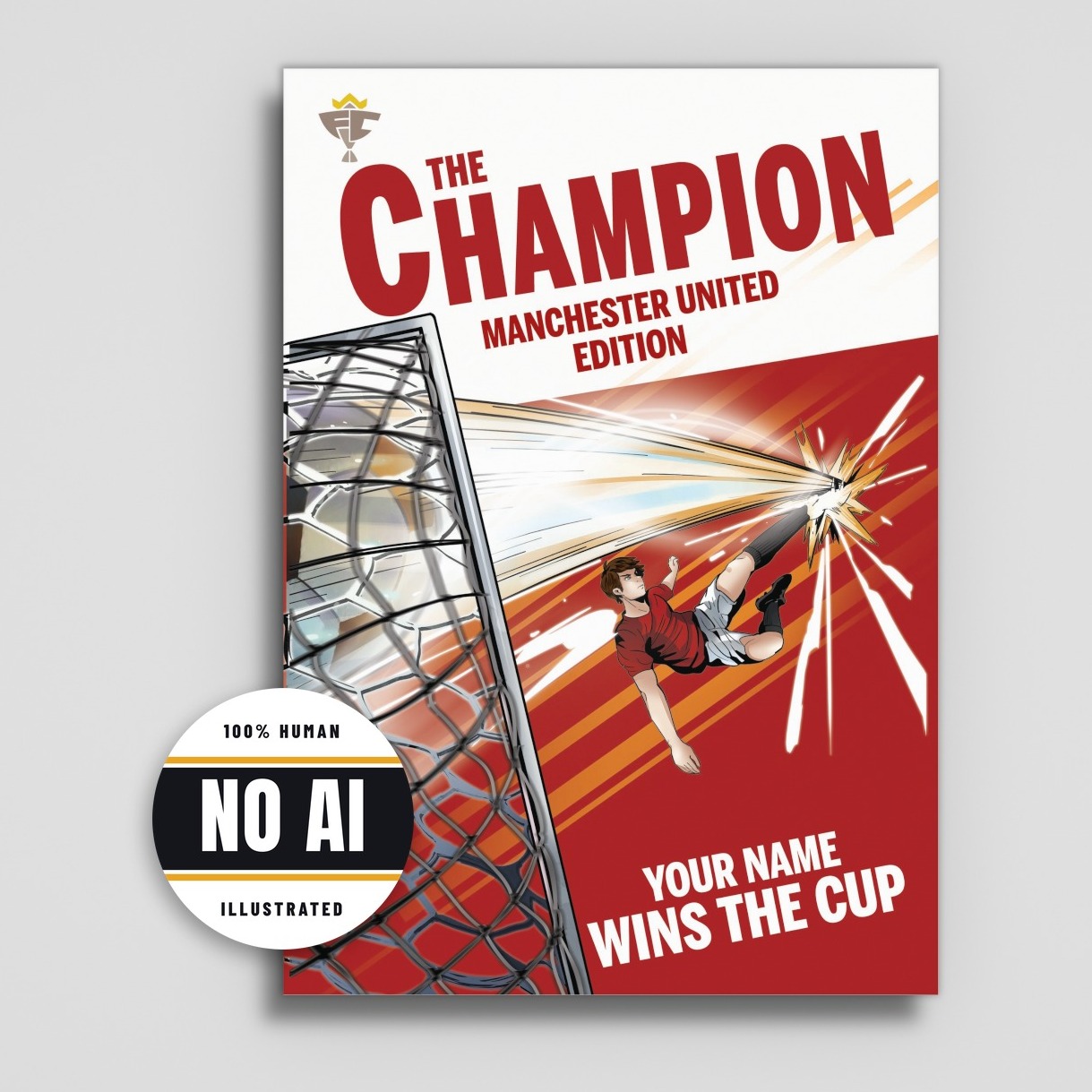
- Every Fantasy Footballer book is drawn by real illustrators, never generated, which matters if you care what your child is actually looking at.
Ask most children to choose between a dense chapter book and a football comic and the comic wins every time. That is not a problem to fix, it is a way in. This guide covers the best football comic books for kids, why the format works so well, and how your child can end up starring in one of their own.
What are the best football comic books for kids?
The best football comic books for kids match the child’s reading confidence and lean into the part of the game they love, whether that is the drama of a last-minute winner or the funny side of a dressing room. Look for a clear hero, a strong visual style, and a story that moves quickly from one panel to the next.
The children’s book charity BookTrust keeps a regularly updated football booklist that mixes comics, graphic novels and illustrated fiction, which is a reliable place to start rather than guessing in a shop.
Are football comics real reading?
Yes, football comics are real reading, and often the most effective kind for a child who says they hate books. A comic still asks a child to decode text, follow a story, track characters and build stamina, all while the artwork keeps them hooked.
The evidence backs this up. National Literacy Trust research found that just 25% of boys aged 8 to 18 enjoy reading in their spare time, and football content is one of the clearest ways to close that gap. A comic that talks about the game in their language is often the shortest route from reluctant to willing.
What age are football comic books good for?
Football comic books work from around age 5 right up to 12 and beyond, as long as the format matches the stage. Younger children do best with short, picture-led strips and simple speech bubbles. Older ones can handle full graphic novels with a proper plot and longer arcs.
- Ages 5 to 7: short comic strips and picture-led stories, read together
- Ages 8 to 10: illustrated comics and early graphic novels with a clear hero
- Ages 11 to 12: longer graphic novels with subplots, rivalry and real stakes
As ever, reading confidence matters more than the age on the cover. A keen seven year old often reads up, and a reluctant eleven year old often prefers something pitched younger.
Should you choose a comic, a novel or an annual?
Choose a comic if your child likes fast, visual storytelling, a novel if they will sit with a longer plot, and an annual if they prefer dipping in and out of facts and quizzes. Most children enjoy a mix, so there is no wrong answer.
Comics and graphic novels are the bridge for a lot of children: lighter than a full novel, richer than an annual, and easy to pick up again. For a wider view across every format, our guide to kids football books breaks the whole shelf down.
How is a personalised football comic different?
A personalised football comic is different because the child is not reading about a footballer, they are the footballer. Their name is in the speech bubbles, their face is in the panels, and their club is on the shirt, which turns a good read into one they come back to again and again.
It also sidesteps the age problem. Because the story is built around your child, you set the level by how you write the dedication and how much you read it together, rather than hoping a label on the spine happens to fit. Our explainer on personalised story books covers exactly how that works.
Football comic books for kids, by type
Here is the quick version of what sits on the shelf, so you can match the format to the child.
- Comic strips: short, funny or dramatic, perfect for the youngest readers and for car journeys.
- Graphic novels: a full story told in panels, ideal for building reading stamina.
- Personalised comics: the child stars as the hero for their own club, made to order.
- Annuals and fact comics: stats, quizzes and cartoons to dip in and out of.
Why a personalised comic where they are the star
A personalised comic earns a second and third read in a way a shelf title rarely does, because it is about them. We hear this most from families buying for a child who already owns every football book going: at that point, a comic with their own name on the cover is one of the few gifts that still gets a genuine reaction on the day.
You choose their club, name, gender, hair, skin tone and eye colour, and we do the rest, right down to a personal message inside the cover. You can personalise their book in about five minutes.
Frequently asked questions
Are football comics good for reluctant readers? Yes, they are often the best option, because the artwork carries some of the load and the fast pace keeps a reluctant reader turning pages.
What is the best football comic book for a young child? For the youngest readers, pick short, picture-led strips with simple speech bubbles. A personalised comic where they are the hero also helps, since the motivation to keep reading is built in.
Do comics count as proper reading? Yes. A child reading a comic is decoding text and following a story, and comics frequently lead on to longer books.
Is the artwork real or computer-made? Every Fantasy Footballer comic is drawn by real human artists, never generated, from the cover to the final page.
Personalise theirs at fantasyfootballer.co.uk.