

In short
- The Ipswich Town mascot line-up is a pair, Bluey and Crazee.
- The badge carries a Suffolk Punch, a real breed of working horse from Suffolk.
- The club’s best-known nickname, the Tractor Boys, started as an insult from Leeds fans in September 2000.
- Ipswich have been at Portman Road since 1884.
- They won the league in their first ever top-flight season, 1961-62.
The Ipswich Town mascot situation is a pair rather than a single character, and the badge they belong to is one of the most agricultural in English football.
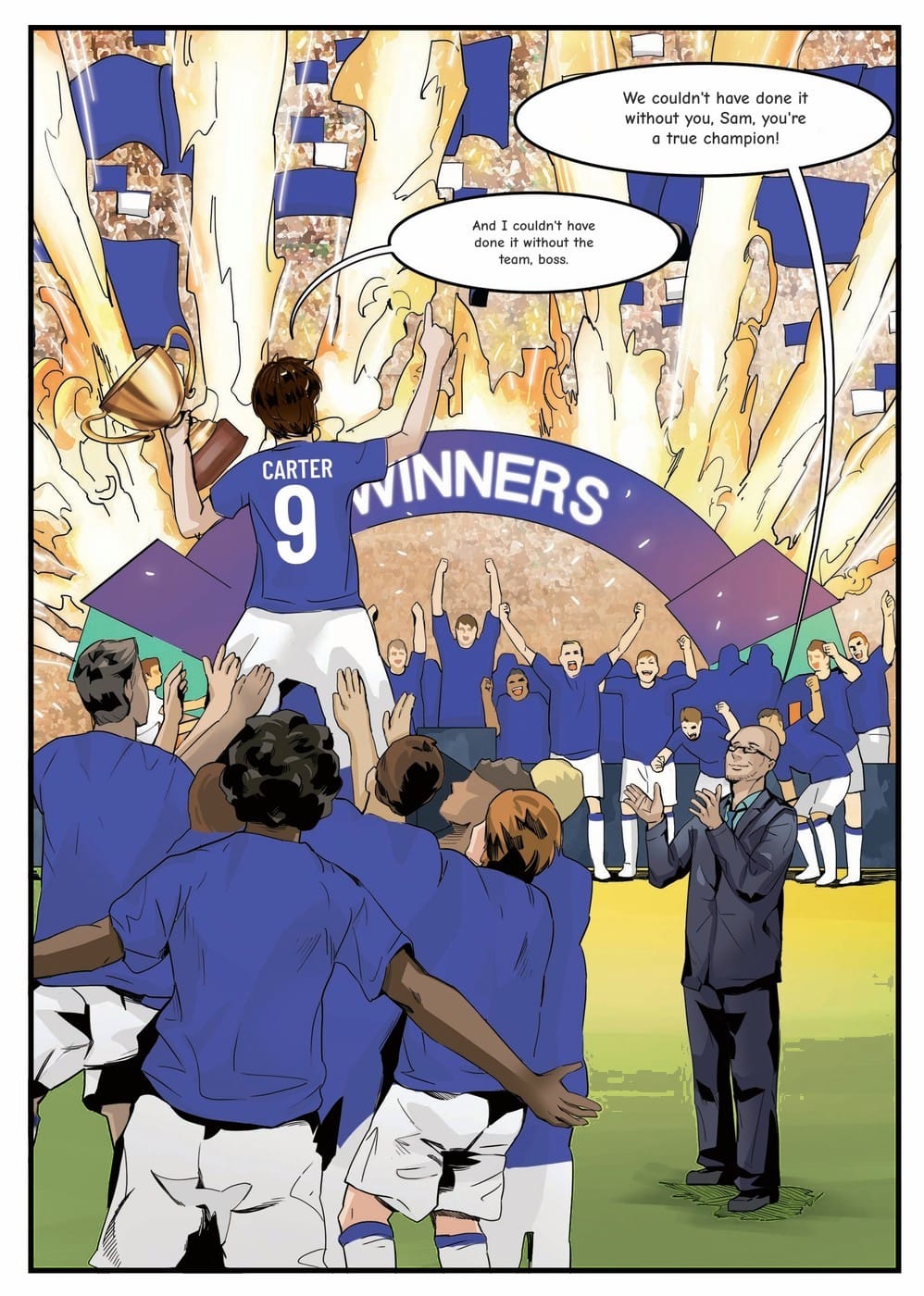
 Make them the hero of the Ipswich Town bookTheir name, number and looks in a hand-drawn football story. £24.95Personalise it
There is a horse, a pair of castle turrets, and a nickname that began as an insult shouted from another club’s stand.
Who is the Ipswich Town mascot?
There are two: Bluey and Crazee.
Wikipedia’s list of football mascots gives both names for Ipswich Town. Having a pair rather than one is common enough, and other clubs do the same: Chelsea have Stamford and Bridget, Stoke have Pottermus and Pottermiss, Brighton have Gully and Sally.
Worth being straight here. The sources checked for this post name the two mascots but do not describe what they are, so rather than guess at the costumes, the rest of this page covers the animal that is definitely on the Ipswich badge.
What is the horse on the Ipswich Town badge?
A Suffolk Punch, which is a real breed of heavy working horse.
The current crest was designed in 1972 and features the Suffolk Punch alongside the turrets of Wolsey Gate, a piece of Ipswich’s historic architecture.
Suffolk Punches are chestnut-coloured draught horses, bred in Suffolk for farm work. They are heavy, powerful and now rare. Putting one on the badge was a deliberate statement about where the club comes from: this is a farming county, and the shirt says so.
The Wolsey Gate turrets are the other half. Between a plough horse and a Tudor gateway, the badge is almost entirely about Suffolk rather than about football.
Where does the Tractor Boys nickname come from?
From Leeds United supporters, in September 2000, and it was meant as a dig.
The generally accepted first use came during a match at Leeds, when the home crowd chanted that they were being beaten by a bunch of tractor drivers.
Ipswich supporters adopted it immediately. It is now the club’s best-known nickname nationally, and it carries the kind of self-deprecating humour that plays on Suffolk’s rural and agricultural character.
This is the lesson worth drawing out for a child. The nickname was an insult, and the fans decided to keep it. That happens a lot in football: West Brom’s Baggies may have started the same way.
What else are Ipswich called?
The Blues, and the Town.
The Blues comes from the traditional blue kit, which is the oldest and plainest of the three. The Town is simply what local people call them, in the way that supporters of most clubs shorten the name to something nobody outside the area would use.
So Ipswich have three nicknames: one from the kit, one from the place, and one from a rival crowd. Only the last one travelled.
The Ipswich Town mascot’s home: Portman Road since 1884
The club was founded on 16 October 1878, which makes them one of the older clubs in England.
They started as Ipswich A.F.C. and merged with Ipswich Rugby Club in 1888. Portman Road has been home since 1884, so the club has played on the same ground for over 140 years, and it now holds 30,056.
Like Portsmouth at Fratton Park and Burnley at Turf Moor, that is a club and a ground that have barely been apart.
What Ipswich Town have won
A league title, an FA Cup and a UEFA Cup, which is more than most clubs of their size.
The headlines:
- The league title in 1961-62. That was their first ever season in the top flight.
- The FA Cup in 1978.
- The UEFA Cup in 1981, beating AZ Alkmaar 5-4 across the final.
Winning the league in your first season in the top division is close to unrepeatable, and no club has done anything like it since. It is the fact to give a child, because it is the sort of thing that sounds made up.
Do other clubs have a working animal on the badge?
A few, and they tend to be the rural ones.
Most club animals are chosen to look fierce or to match a nickname: lions, tigers, eagles, foxes. A Suffolk Punch is none of those. It is a horse that pulls a plough.
That puts Ipswich in a small group of clubs whose badge is about local work rather than local pride. Burnley have cotton plants on theirs for the mills. West Ham have shipyard hammers. Sunderland have a colliery wheel.
Those are the badges worth getting a child to look at properly, because every one of them is a picture of what people in that town used to do all day.
Put your child in the blue shirt
A club with a plough horse on the badge and a nickname borrowed from an insult gives a child plenty to be curious about.
Our personalised Ipswich book makes your child the star player in blue, with their own name, their shirt number, and their hair colour, skin tone and eye colour matched to the real them. A personal message is printed inside the cover. Every illustration is hand-drawn by a real artist, with no AI, ever, which we explain on our page about hand-drawn illustrations.
Buying ahead for December? Start at our Ipswich Christmas gifts page, or browse all comic football storybooks.
They are not reading about the star player. They are the star player.
For a young Ipswich Town fan
The personalised Ipswich Town storybook
- Their name and shirt number on the cover
- Hair colour, skin tone and eye colour to match them
- Your own message printed inside
- Every page hand-drawn by a human artist, with no AI artwork
For ages 5 to 12. Made to order for your child.
Frequently Asked Questions
Who is the Ipswich Town mascot? There are two: Bluey and Crazee.
What is the horse on the Ipswich Town badge? A Suffolk Punch, which is a real breed of heavy working horse.
Where does the Tractor Boys nickname come from? From Leeds United supporters, in September 2000, and it was meant as a dig.
What else are Ipswich called? The Blues, and the Town.
More on Ipswich Town: the nickname.