

In this guide
A radio commentator has to say where the ball is. A television commentator must not, because the viewer can already see it, and almost everything else about the job follows from that single difference.
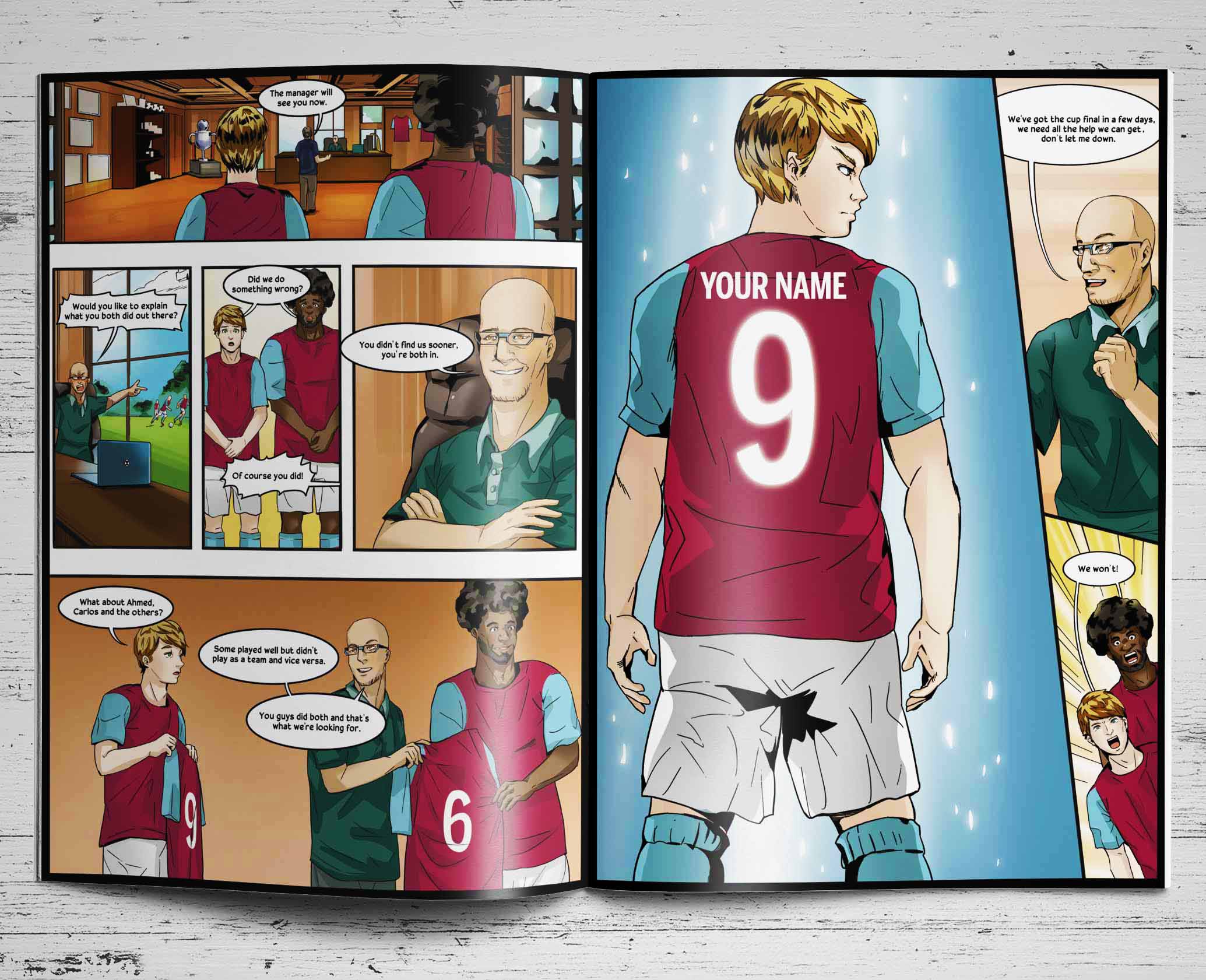
 Make them the star of their club's storyA personalised, hand-drawn football book for more than 100 clubs. £24.95Find their club
What does a commentator do?
Describe a match as it happens. Our source on the sports commentator sets out that they provide live commentary on a game or event, usually for radio or television.
They are also called sportscasters or sports announcers, depending where you are.
How does a radio commentator differ?
By carrying all of the information. Our source notes that radio requires the commentator to describe the action in far more detail and to give an ongoing account of the progress of play.
Television commentators speak over images instead, with crowd and pitch noise audible behind them.
Are they ever on screen?
Rarely during the match. Our source records that television commentators seldom appear on screen while the event is running, although some broadcasters show them before, after, or briefly in breaks.
The voice is the whole of the job, which our piece on stadium announcers contrasts with the role inside the ground.
How old is the job?
Older than television. Our source dates the history of sports commentating to April 1921, in the United States, and notes that the development of radio changed how the public consumed sport by letting people hear events in real time.
Our piece on early coverage walks through the English end of that story.
Is a commentator the same as a pundit?
No. A pundit offers opinion in an authoritative manner on a subject, while a commentator describes what is in front of them, and our source on sports broadcasting covers how both fit into a programme.
One tells you what happened. The other tells you what to think about it.
Try it at home
Turn the sound down and let a child commentate, then read our personalised football books in the same voice. Our guide to stadium tours explains seeing the gantry itself.
There is more in our guides to why players spit and snow on matchday.
Short answers
What is the job? Describing a match live, as it happens.
Radio or television? Radio needs far more description.
When did it start? Commentating dates to April 1921.
Same as a pundit? No, pundits give opinion.
Image: Andrew Cotter by Magooster23, CC BY-SA 4.0.


More than 100 clubs
Make them the star of their club's story
- Their name and shirt number on the cover
- Hair colour, skin tone and eye colour to match them
- Your own message printed inside
- Every page hand-drawn by a human artist, with no AI artwork
For ages 5 to 12. Made to order for your child.
Frequently Asked Questions
What does a commentator do? Describe a match as it happens.
How does a radio commentator differ? By carrying all of the information.
Are they ever on screen? Rarely during the match. Television commentators seldom appear on screen while the event is running, although some broadcasters show them before, after, or briefly in breaks.
How old is the job? Older than television.